Echoes of the Puranas
Once, Narmada ji pleased Lord Brahma by doing an extremely harsh penance. Brahma ji appeared and asked Narmada ji to ask for a boon.
Narmada ji said to the Supreme Father Brahma – Oh God! If my penance satisfies you and I please you. Therefore, give me the boon of being like Ganga ji.
After listening to Narmada ji, Brahma ji said – “Can Lord Vishnu have any equal among men?”
Or alternatively:
After listening to Narmada ji, Brahma ji said – “Does any other man equal Lord Vishnu?” Can any other deity match Lord Shiva? Or there may be another woman like Goddess Parvati. Narmada ji left there after listening to Brahma ji. Subsequently Maa Narmada established Shivling in the Pilpila pilgrimage in Kashi Puri to please Bhole Nath and started doing penance.
Then Lord Shiva, very pleased with Narmada’s penance, asked her to ask for a boon. Then Narmada said that God, give me only this boon: that my devotion remain at your feet forever.
Lord Shiv Shankar was very happy after listening to Narmada . He said that all the pebbles on the Narmada river will become Shankar. Just seeing you will destroy all sins. Lord Shankar absorbed himself in the same sex forever by saying this. Mother Narmada was very happy after getting so many blessing purity. Since then, people have worshipped the pebble of Narmada as Shankar, known as the Narmadeshwar Shivling.

In Hindu mythology, the Narmadeshwar Shivling is a sacred stone that people find in the Narmada River. They believe it to be a self-manifested (svayambhu) form of Lord Shiva. The story goes that Lord Shiva granted a boon to the river Narmada. While stating that all stones in her waters would be considered Shivlings. Therefore, people consider every stone in the Narmada a Narmadeshwar Shivling. People believe that these stones possess divine energy and spiritual significance.
What is a Narmadeshwar Shivling?
- Naturally Occurring (Svayambhu): Unlike man-made Shivlings, Narmadeshwar Shivlings are natural stone formations from the Narmada Riverbed. They consider them “self-manifested” or “self-born,” believing them to be imbued with divine energy directly from Lord Shiva.
- Sacred River: People highly revere the stones of the Narmada River, which is one of the holiest rivers in India. It’s believed that every pebble from the Narmada is a form of Shankar (Lord Shiva) .
- High Vibrational Energy: People believe that Narmadeshwar Shivlings possess powerful energies that harmonize and balance the environment. It protect devotees from negative influences. People say that they have a very high frequency or vibration.
- No Pran Pratishtha Required: Due to their self-manifested nature, Narmadeshwar Shivlings do not typically require the “Pran Pratishtha” (life-consecration) ceremony that other idols or Shivlings might need before worship.
Characteristics of a Black Narmadeshwar Shivling:
Creation and Dissolution: The Sanskrit words “laya” (dissolution) and “agaman” (recreation) derive the word “Linga” itself. It symbolise Shiva’s role in both creation and destruction, the cyclical nature of the universe
COMPOSITION
They consist of cryptocrystalline quartz.
SIGNIFICANCE
- Spiritual Significance: Believers worship the Narmadeshwar Shivling to deepen their spiritual connection, enhance meditation, and promote self-realisation.
- Protection and Well-being: Many believe it has protective qualities, shielding devotees from negative influences and fostering a sense of security.
- Material Prosperity: Devotees associate the Shivling with material well-being, seeking blessings for abundance, success, and the removal of obstacles.
- Positive Energy: People consider the Narmadeshwar Shivling a source of positive energy. They believe it brings peace and positive thoughts to the mind.
- Connection to the Divine: People see the Shivling as a conduit to connect with the divine, attracting positive cosmic energies and dispelling negativity.
- Unique Form: Unlike sculpted Shivlings, the river’s flow naturally forms Narmadeshwar Shivlings, making each one unique and sacred.
- Scriptural Importance: Some scriptures suggest that worshipping a Narmadeshwar Shivling is equivalent to worshipping many other Shivling
- These shivling possesses extreme healing power and are potent in opening the chakras of the body.
- Removes Vastu Dosha: People believe it rectifies Vastu flaws and brings auspiciousness to the dwelling.
- Potency (as per scriptures): According to the Shiva Purana, worshipping a Narmadeshwar Shivling grants the same spiritual merit (Punya) as worshipping a thousand other Shivlings, highlighting its extraordinary power.
- Mysterious Power: People believe that it rectifies Vastu flaws and brings auspiciousness to the dwelling. They believe that it possesses a mysterious power that helps induce focus and concentration, making it ideal for meditation and spiritual practices.
BASED ON NATURA L MARKING AND PATTERNS
JANEUDHARI NARMADESHWAR SHIVLINGAM
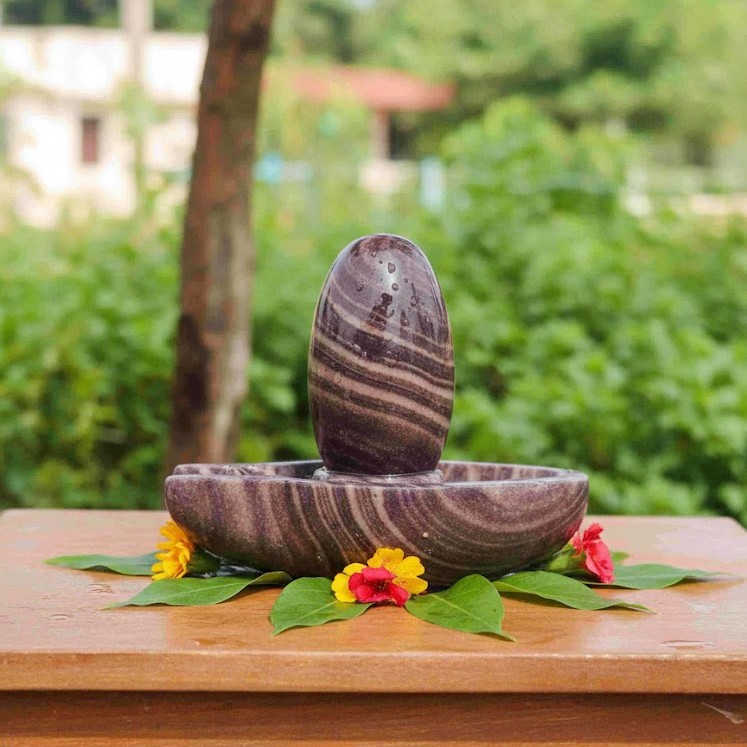
Believed to possess spiritual and healing properties
Brings harmony and prosperity
A “Janeudhari Narmadeshwar Shivling” adorns the sacred thread (Janeu or Yajnopavita) from the Narmada River. It signify purity and a connection to the divine
The Janeu on the lingam emphasises the importance of purification and the pursuit of spiritual knowledge and liberation.
Home Worship:
People often keep Narmadeshwar Shivlings, especially those adorned with the Janeu, in their homes for daily worship, meditation, and to invoke blessings from Lord Shiva.
ARDHANARESHWAR NARMAESHWAR SHIVLING
Representation of Shiva and Shakti:
Cosmic Union: The Shivling symbolizes the union of Lord Shiva (consciousness/masculine energy) and Devi Shakti (energy/feminine energy). It represents the cosmic pillar of fire, symbolizing the divine, eternal, and boundless nature of Shiva. The smooth, elliptical shape of the Narmadeshwar Shivling naturally
People believe that an Ardhnarishwar Narmadeshwar Shivling, representing the combined form of Lord Shiva and Parvati, brings blessings of harmony, prosperity, and spiritual growth. They also think it removes vastu doshas, protects from negative energies, and enhances relationships, particularly between couples.
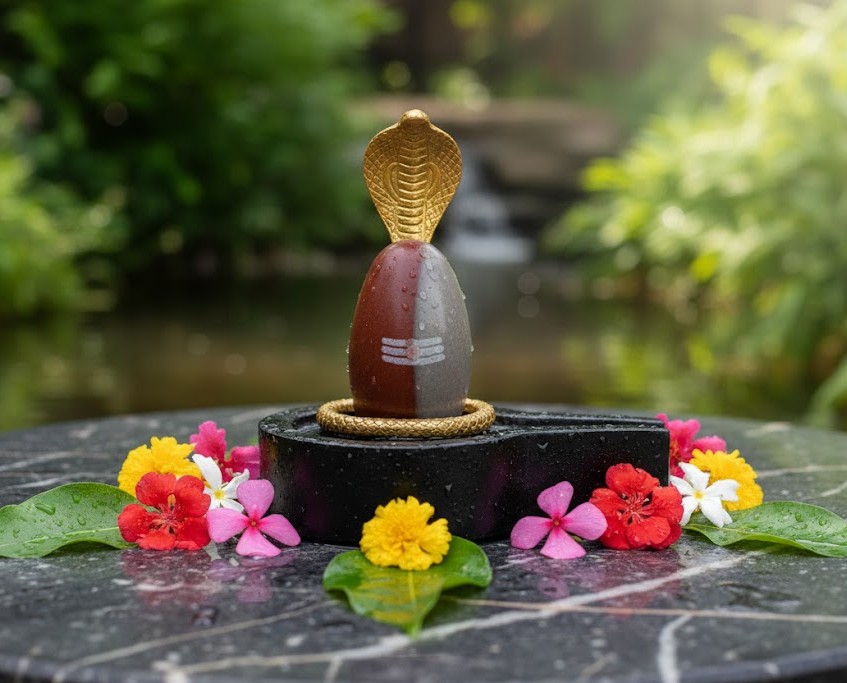
BENEFITS OF ARDHNARESHWAR NARMADESHWAR SHIVLING
- Enhancement of Harmony and relationship : Respect, harmony, and affection between couples are thought to enhance relationships and help restore cordiality.
- Relationship Harmony: The Ardhnarishwar form represents the unity of masculine and feminine energies, symbolising balance and harmony. Many believe that worshiping it strengthens marital bonds, resolves conflicts, and promotes mutual respect and affection between husband and wife.
- Fulfils Desires and Bestows Prosperity: Many people believe that worshiping the Ardhnarishwar Shivling can lead to success, wealth, and the fulfillment of desires.
- Promotes Well-being: Worshiping the Ardhnarishwar Shivling promotes overall well-being, enhancing both physical and mental health while bringing peace and happiness.
- Spiritual Growth: Many consider the Ardhnarishwar Shivling a powerful tool that enhances meditation practices, facilitates deeper states of consciousness, and fosters a stronger connection with the divine.
TILAKDHARI NARMADESHWAR SHIVLING
A “Tilakdhari” Narmadeshwar Shivling, the stone naturally exhibits a mark resembling a tilak, making it even more unique and auspicious. This mean one with a natural tilak or mark, believed to offer various benefits when worshipped, including promoting happiness, prosperity, and peace within the home. People also believe that it removes negative energy, bestows knowledge and wealth, and helps fulfill wishes.
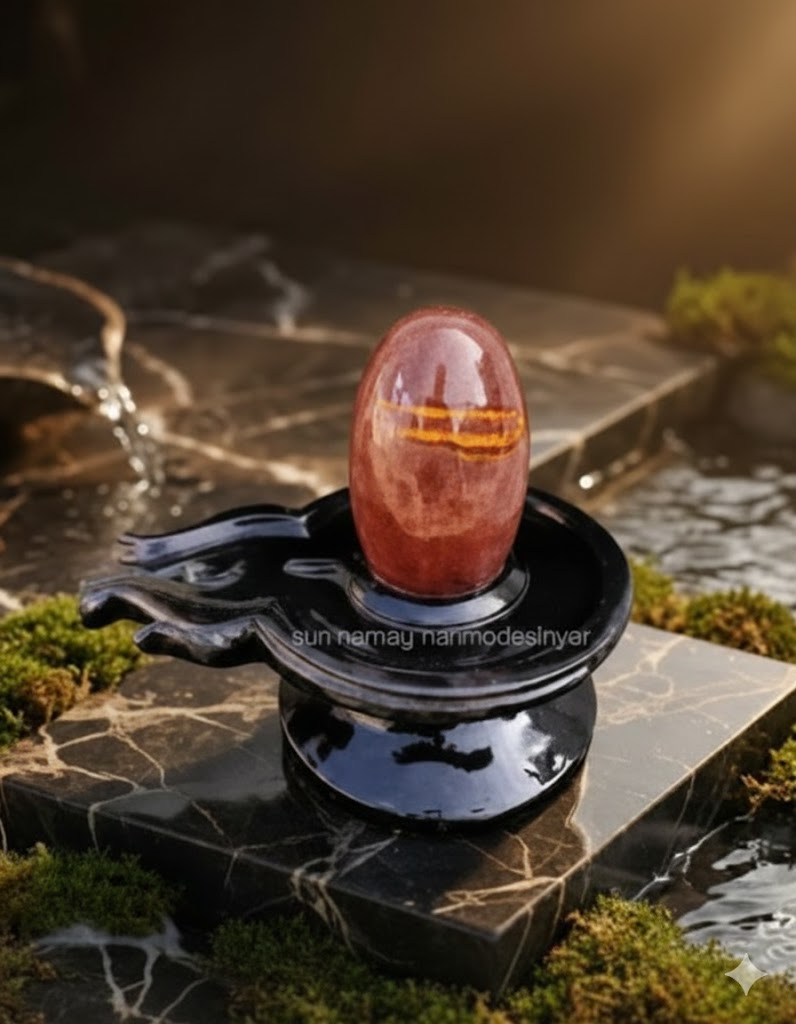
BENEFITS OF TILAKDHARI NARMADESHWAR SHIVLING
- Fulfilment of Wishes: Many view it as a powerful tool for fulfilling both mundane and spiritual wishes.
- Removal of Obstacles: Anointing the Shivling with Panchaamrit is believed to remove obstacles and challenges.
- Mental Clarity and Focus: It may enhance focus and concentration, leading to improved decision-making and overall well-being. According to the Narmadeshwar Shivling resource a Tilakdhari Narmadeshwar Shivling makes it exceptionally sacred and highly sought after for worship.
People believe that lighting a lamp daily before the Shivling can lead to attaining Shivlok, the abode of Lord Shiva.
TRIPUND NARMADESHWAR SHIVLING
A Tripundra Narmadeshwar Shivling features a naturally occurring Tripundra marking. This set of three horizontal lines, worn by Shaivites on their forehead as a tilaka, combines with the Shivling symbol to create a highly auspicious effect, believed to enhance the spiritual power and significance of the Shivling.

- The three lines often symbolize various concepts related to Shiva, such as the three Gunas (Sattva, Rajas, Tamas), the three worlds (heaven, earth, underworld), furthermore the three aspects of Shiva (Brahma, Vishnu, Mahesh).
- Tripundra:The Tripundra is a sacred tilaka made of vibhuti (holy ash) that symbolizes Lord Shiva and embodies his three powers: icchā (will), kriyā (action), and jñāna (knowledge).
- Combined Significance: The Tripundra Narmadeshwar Shivling forms a powerful combination, believed to amplify the positive energies and spiritual benefits associated with both the Narmadeshwar Shivling and the Tripundra symbol.
- Benefits: People believe that worshiping a Tripundra Narmadeshwar Shivling brings blessings, prosperity, and protection.
- Natural Formation: These Shivlings are unique due to their natural formation and the distinct Tripundra markings, making each one a rare and special object of worship.
TRINETRA DHARI NARMADESHWAR SHIVLING

A “Trinetra Dhari Narmadeshwar Shivling” refers to a type of naturally formed Shiva Lingam from the Narmada River that features a distinct three-line marking. These natural patterns represent the three eyes of Lord Shiva, vastly enhancing the lingam’s sacredness and spiritual resonance.
Divine Alignment: Beyond creation, the marking signifies the perfect equilibrium of cosmic forces, anchoring divine balance and order within the universe.
Perception and Intuition: The Trinetra, or third eye, embodies Shiva’s ability to perceive the cosmos, unlock deep intuition, and manifest fresh beginnings.
The Cosmic Cycle: Representing the eternal rhythm of existence, this sacred emblem encompasses creation, preservation, and destruction, reminding us that every ending gives birth to a new beginning.
Significance: The presence of the Trinetra on a Narmadeshwar Shivling enhances its spiritual power and is viewed as a direct blessing from Lord Shiva. Many believe it brings protection, wisdom, and prosperity to worshippers.
* Mental Clarity: The soothing energy can help reduce stress, anxiety and improve concentration.
Protection:
The Trinetra, especially when combined with the protective properties of red coral, is believed to shield the devotee from negative energies, evil forces, and malevolent influences.
- Enhanced Meditation: The Trinetra is linked to the Ajna Chakra (third eye chakra) and is thought to deepen meditation practices, promote spiritual awakening, and connect with higher consciousness.
- Balancing Chakras: The pendant can help align and balance the body’s energy centres (chakras), leading to emotional stability, mental clarity, and physical well-being.
Red Coral (Moonga) in Hinduism:
- Red coral is regarded as a powerful gemstone in Vedic astrology and is linked to Lord Shiva.
- People believe that it offers protection from negative energies, enhances courage, and promotes vitality.
BASED ON COLOR
BLACK NARMADESHWAR SHIVLING
A “Black Narmadeshwar Shivling” refers to a specific type of sacred Shivling that is naturally found in the Narmada River in Central India and predominantly features a black color.
Natural Color: The black color of these Shivlings is entirely natural and not artificially colored.
- Rarity: Black Narmada Lingams are considered exceptionally rare, which further elevates their spiritual significance. While Narmadeshwar Shivlings come in various hues, the predominantly black ones are considered particularly rare and potent. Their dark color is natural and not artificially induced.
- In essence, a black Narmadeshwar Shivling is a highly revered and powerful object of worship in Hinduism, valued for its natural origin, unique properties, and profound spiritual benefits.
- Balancing Energies: The black colour is often associated with absorption and grounding. A black Narmadeshwar Shivling is believed to absorb negative energies, cleanse the environment, and bring balance and harmony.
BROWN NARMADESHWAR SHIVLING

A brown Narmadeshwar Shivling refers to a Shivling (a representation of the Hindu deity Lord Shiva) that is naturally formed in the Narmada River and has a brown colour.
Specific Aspects of a Brown Narmadeshwar Shivling:
While the core benefits apply to all Narmadeshwar Shivlings, the brown colour can subtly influence their energetic properties and is often associated with:
- Grounding and Stability: Brown is a color associated with earth, stability, and grounding. A brown Narmadeshwar Shivling may be particularly beneficial for promoting a sense of rootedness, security, and stability in life.
- Practicality and Abundance: Brown can also symbolize practicality, hard work, and the abundance of the earth. It might be sought by those looking to enhance their material prosperity and achieve success in worldly endeavors through grounded efforts.
- Warmth and Comfort: The earthy tones of brown can evoke feelings of warmth, comfort, and security, creating a nurturing atmosphere for spiritual practice.
- Natural Patterns: Brown Narmadeshwar Shivlings, like black ones, often exhibit unique natural patterns, lines, and sometimes even disseminated red or black spots, which are considered signs of their authenticity and divine markings.
RED NARMADESHWAR SHIVLING
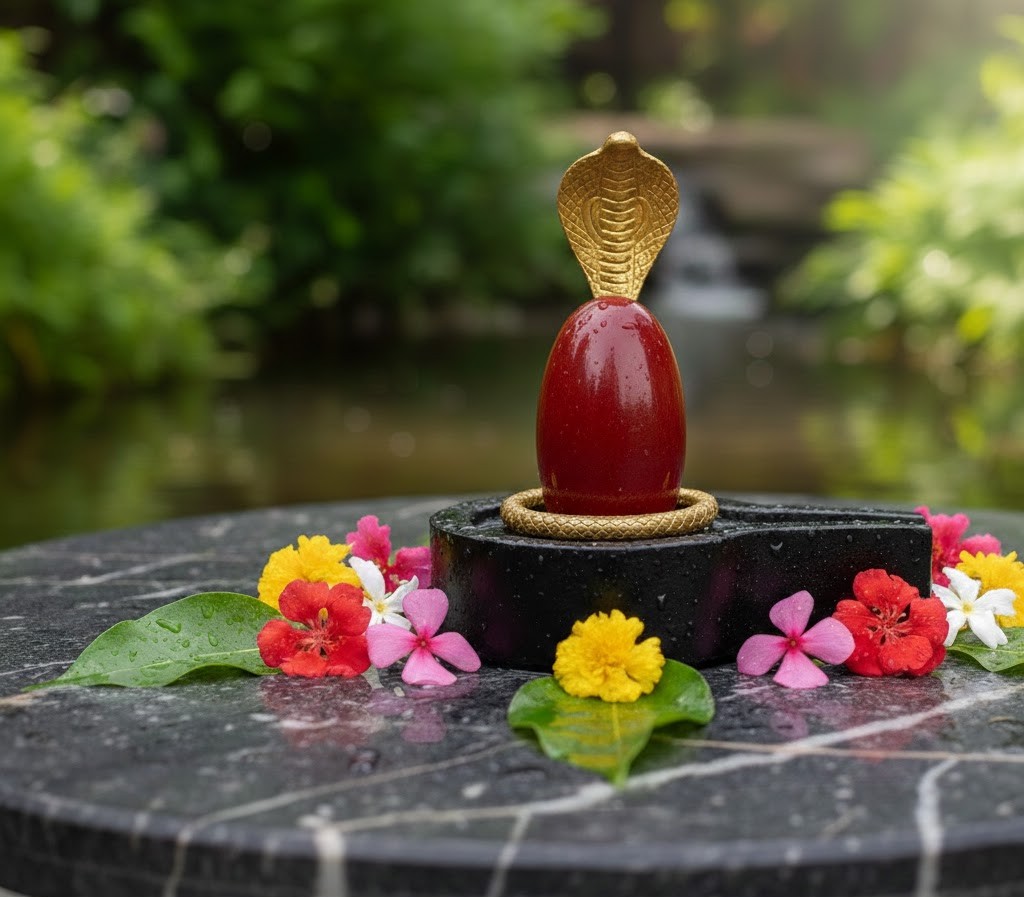
A red Narmadeshwar Shivling is a sacred stone, naturally formed in the Narmada River, that is believed to be a representation of Lord Shiva and is revered in Hinduism. These Shivlings are known for their smooth, elliptical shape and are considered to be a symbol of divine energy and auspiciousness. The red color, when present, can be a natural variation in the stone’s formation and adds to its uniqueness
The significance of a red Narmadeshwar Shivling often lies in the interpretation of its color and its natural formation:
- Representation of Shakti (Feminine Energy): In some interpretations, the red color or red markings on a Narmadeshwar Shivling are believed to represent the feminine energy (Shakti) within the Shivling, complementing the masculine energy (Linga) that the stone embodies. This signifies the union of Shiva and Shakti, the cosmic creative and destructive forces, leading to balance and harmony.
- Passion, Energy, and Vitality: Red is traditionally associated with vitality, passion, strength, and energy. A red Narmadeshwar Shivling can symbolize the active, dynamic aspect of Shiva’s energy.
Increased Vitality and Drive: Due to its association with passion and energy, a red Narmadeshwar Shivling might be sought by those looking to boost their personal drive, courage, and vitality.
WHITE NARMADESHWAR SHIVLING
A white Narmadeshwar Shivling refers to a Shivling (a representation of the Hindu deity Shiva) made from a white-colored Narmada stone, found naturally in the Narmada River. These lingams are considered auspicious and are believed to attract positive energy and dispel negativity
The white color in Hinduism and various spiritual traditions is associated with:
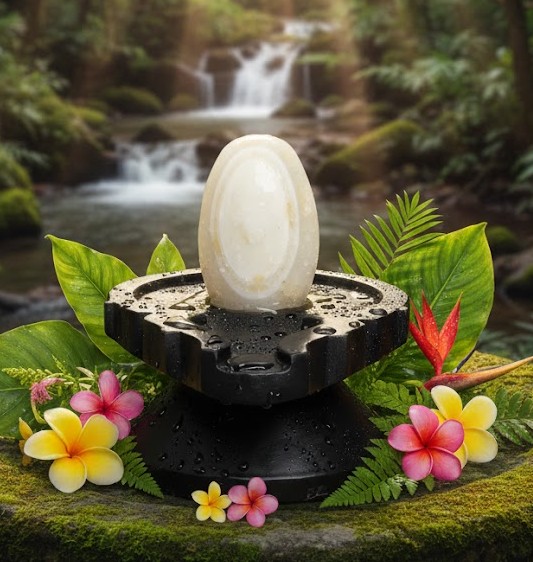
- Purity and Serenity: White is universally a symbol of purity, innocence, and spiritual clarity. A white Narmadeshwar Shivling is believed to radiate a very pure and calming energy.
- Knowledge and Wisdom (Sattva Guna): White is often linked to the Sattva Guna, which represents goodness, purity, knowledge, and spiritual enlightenment. Worshipping a white Shivling is believed to foster intellectual and spiritual growth.
- Peace and Tranquility: The calming influence of white makes these Shivlings particularly conducive to creating an atmosphere of peace, serenity, and harmony in the home or meditation space.
- Divine Light and Consciousness: White can symbolize the divine light, cosmic consciousness, and the unmanifested aspect of Shiva. It represents the ultimate truth and the transcendental nature of the divine.
- New Beginnings and Freshness: White also signifies new beginnings and a clean slate, making it suitable for those seeking to purify their lives and embark on a new spiritual journey.
Benefits of White Narmadeshwar Shivling:
Enhanced Inner Peace and Calmness: The purity of the white colour is believed to amplify the Shivling’s ability to bring profound inner peace, tranquillity, and mental clarity. It’s often chosen by those seeking solace from daily stress and turmoil.
- Spiritual Purity and Enlightenment: It is particularly sought after for purification of the mind, body, and soul, aiding in deep meditation and fostering a quicker path towards spiritual enlightenment and self-realization.
- Improved Concentration and Focus: The serene energy of a white Shivling is thought to be excellent for improving concentration, focus, and mental clarity, beneficial for students, professionals, and spiritual practitioners alike.
- Promotes Positive Thoughts and Outlook: It helps in dispelling negative thoughts, fostering a positive mindset, and promoting emotional balance.
- Ideal for Meditation and Yoga Spaces: Due to its pure and calming vibrations, a white Narmadeshwar Shivling is often considered perfect for setting up a meditation altar or a dedicated yoga space.
As with any sacred object, the effectiveness and perceived benefits of a white Narmadeshwar Shivling largely depend on the devotee’s faith, sincerity, and consistent worship
BANALINGAM
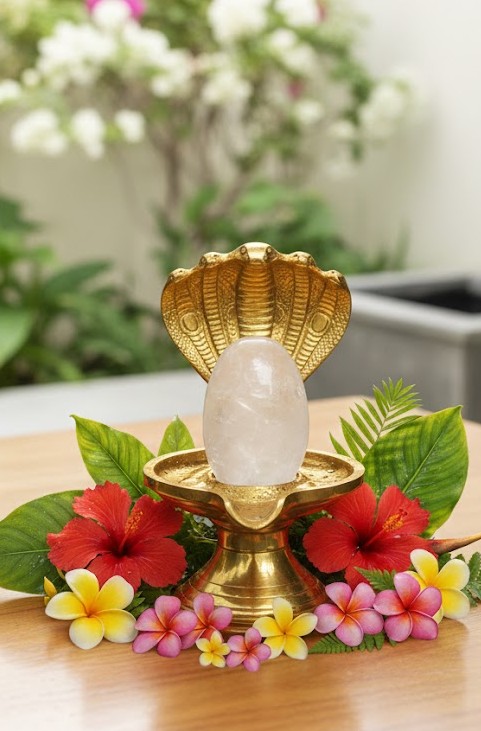
It all started with one asura worshipped in the form of Shankar, which is known as Narmadeshwar Shivling, by the name Baanaasura. He had put up a great penance to attain the grace of Lord Shiva at the Narmada River. When Lord Shiva asked him to disclose his wish. He conveyed that he wanted the Lord to be with him forever, and that was granted by the Lord. Due to which we are getting Shivling from the Narmada river. The other name for Narmadeshwara lingam is Baana lingam, which has a translucent appearance.
- Symbolism: They are considered aniconic (not in human form) representations of Lord Shiva. The word “Banalingam” is believed to be derived from King Banasura, an ardent devotee of Shiva, at whose request Shiva is said to have assumed the form of the Lingam.
- “Svayambhu” (Self-Born): A significant characteristic of Banalingams is that they are naturally formed, not carved or crafted by human hands. This makes them “Svayambhu” or self-manifested, imbuing them with immense spiritual power and authenticity in the eyes of devotees.
Significance:
- Divine Manifestation: They are regarded as direct manifestations of Lord Shiva and are believed to embody his essence and energies.
- Worship: Banalingams are highly sought after for daily worship in Hindu households and temples. Worshipping them is believed to bring blessings, spiritual harmony, protection, and a deeper connection to Lord Shiva.
- Panchayatana Puja: They are often a part of the fivefold family of deities (Panchayatana) worshipped in Smarta traditions, which include Shiva, Vishnu, Devi, Surya, and Ganesha.
- Rarity: True, naturally formed Banalingams are considered quite rare, especially those with translucent qualities or unique markings. The demand has led to the artificial production of similar-looking stones, but genuine Banalingams from the Narmada River hold a special place.
Characteristics:
- They are typically smooth, elliptical, and can vary in color from white, brown, grey, to black, often with natural markings.
- They are known for their strength, with a hardness of about 7 on the Mohs scale (similar to quartz).
- Genuine Banalingams are said to glow with light and display mesmerizing natural artwork when light is held against them.
In essence, a Banalingam is a powerful and revered symbol in Hinduism, cherished for its natural origin and its direct association with Lord Shiva.
Banalingam vs. Narmadeshwar: Clearing the Sacred Confusion
A Banalingam (also spelled Banalinga) is a sacred stone revered in Hinduism, particularly by Shaivites (devotees of Lord Shiva) and Smarta Brahmins. Here’s a breakdown of its key aspects:
- Origin: Banalingams are naturally occurring stones found primarily in the riverbed of the Narmada River in Madhya Pradesh, India. They are formed by natural processes of erosion, giving them a smooth, ellipsoid, or oval shape.
- Symbolism: They are considered aniconic (not in human form) representations of Lord Shiva. The word “Banalingam” is believed to be derived from King Banasura, an ardent devotee of Shiva, at whose request Shiva is said to have assumed the form of the Lingam.
- “Svayambhu” (Self-Born): A significant characteristic of Banalingams is that they are naturally formed, not carved or crafted by human hands. This makes them “Svayambhu” or self-manifested, imbuing them with immense spiritual power and authenticity in the eyes of devotees.
Significance:
Divine Manifestation: They are regarded as direct manifestations of Lord Shiva and are believed to embody his essence and energies.
- Worship: Banalingams are highly sought after for daily worship in Hindu households and temples. Worshipping them is believed to bring blessings, spiritual harmony, protection, and a deeper connection to Lord Shiva.
- Panchayatana Puja: They are often a part of the fivefold family of deities (Panchayatana) worshipped in Smarta traditions, which include Shiva, Vishnu, Devi, Surya, and Ganesha.
- Rarity: True, naturally formed Banalingams are considered quite rare, especially those with translucent qualities or unique markings. The demand has led to the artificial production of similar-looking stones, but genuine Banalingams from the Narmada River hold a special place.
Characteristics:
- They are typically smooth, elliptical, and can vary in color from white, brown, grey, to black, often with natural markings.
- They are known for their strength, with a hardness of about 7 on the Mohs scale (similar to quartz).
- Genuine Banalingams are said to glow with light and display mesmerizing natural artwork when light is held against them.
In essence, a Banalingam is a powerful and revered symbol in Hinduism, cherished for its natural origin and its direct association with Lord Shiva.
| NARMADESHWAR | BANALIMGAM |
| General term for naturally formed Shiva Lingams | Specific, rarer type |
| Origin | Found in the Narmada Riverbed | Found in the Narmada riverbed ( deeper , longer exposure ) |
| Naturally shaped, opaque | Translucent (glows when light I’d passed through) |
| Various (brown, black, grey, reddish) | Typically translucent white or light pale |
| More common | Extremely rare |
| Highly sacred and powerful | Considered even more potent and deeply connected to shiva |
When purchasing, be aware that many vendors might use “Banalingam” interchangeably with “Narmadeshwar Shivling” or might misrepresent opaque Narmadeshwar Shivlings as Banalingams. A true Banalingam’s translucency is its defining characteristic.